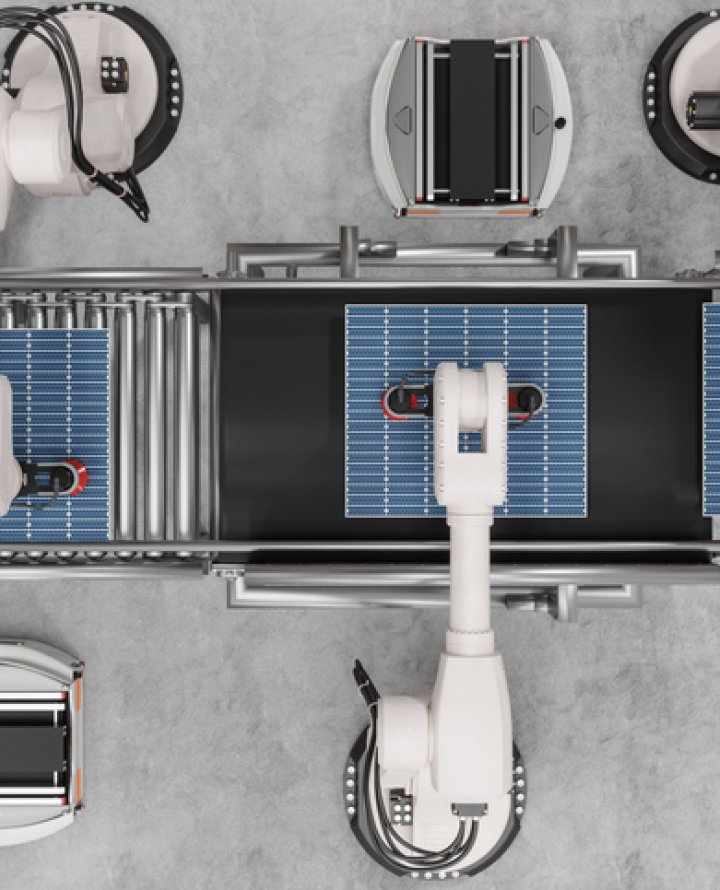
A fourth industrial revolution is currently taking place: the transition of industry to a digital world in which ICT penetrates deeply into all facets of the production process. The Internet of Things, unlocking big data and connecting currently still separate information flows and production steps play a central role in this. Smart industry research is not only about technology, but also about the impact on the environment: smart industry is expected to fundamentally change our society. Online services are already having a major impact on business models. And the ubiquitous availability of information raises questions around privacy. Increasing robotisation and with it the possible loss of jobs is also a concern.
Connecting character
The technical challenges of a smart industry require cooperation between multiple disciplines, such as different engineering disciplines, materials research and ICT research. Given the high societal impact of this field, interaction with sociological or ethical researchers will also have to be sought. Smart industry ties in with the top sector High Tech Systems and Materials, but also with Water, Agri&Food and Horticulture & Starting Materials. Moreover, this concept offers many opportunities for production companies and related suppliers and customers, with great development opportunities for SMEs. In a pilot programme, several so-called field labs have now been set up. Field labs are practical environments in which companies and knowledge institutions can develop, test and implement targeted solutions and from which new research questions are formulated.