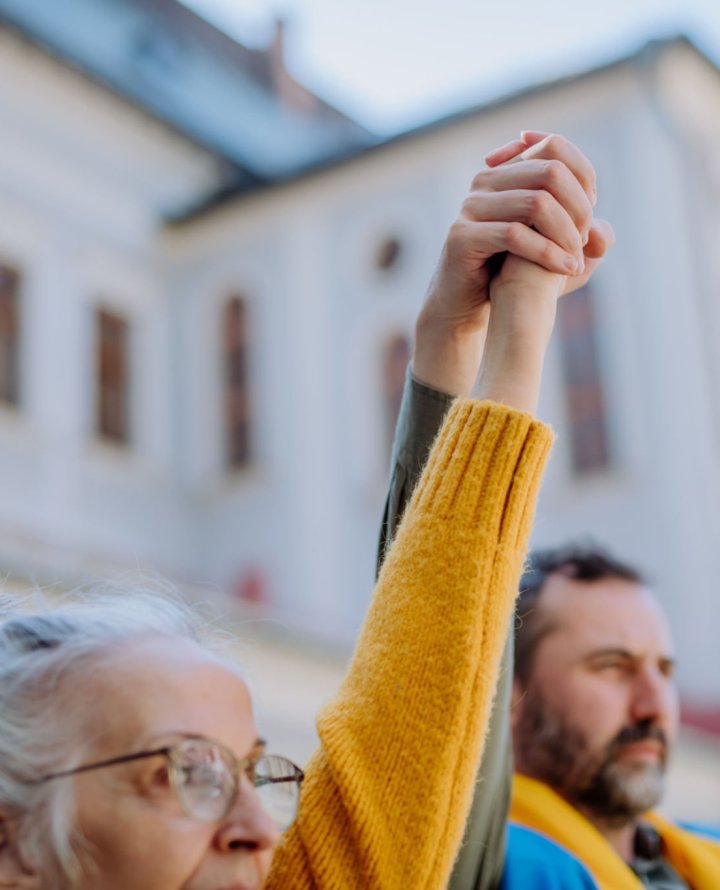
Citizens, businesses, markets and nations are increasingly intertwined and across national borders, making them increasingly vulnerable in economic, social and societal terms. This manifests itself in many areas, such as jihadism, terrorism and crime, but also security, employment, investment climate, sustainability and technology. Risky, difficult to foresee and uncontrollable international developments, such as the emergence of new economies, food or financial scandals, an attack or the outbreak of an epidemic, are often the cause of unrest. This can only be managed to a limited extent. However, some individuals, groups or countries are more successful than others in creating a favourable climate for dealing with conflicts and securing a certain degree of social tolerance and cooperation.
Connecting character
Promoting peace, security and cooperation has many perspectives and a great deal of stratification. It requires integrated policies and a multidisciplinary approach, bringing together many disciplines, especially from the technical, social and human sciences. Smart solutions to everyday problems of citizens in diversified societies and sustainable relationships in the intercourse between businesses, governments and social partners require fundamental insights into, among other things, the functioning of social and economic systems, the behaviour of individuals, groups and institutions, the development of language and culture and related identity formation, education and development of young people. Issues relating to the role and legitimacy of democratic constitutional states, distribution and equality also touch on this.