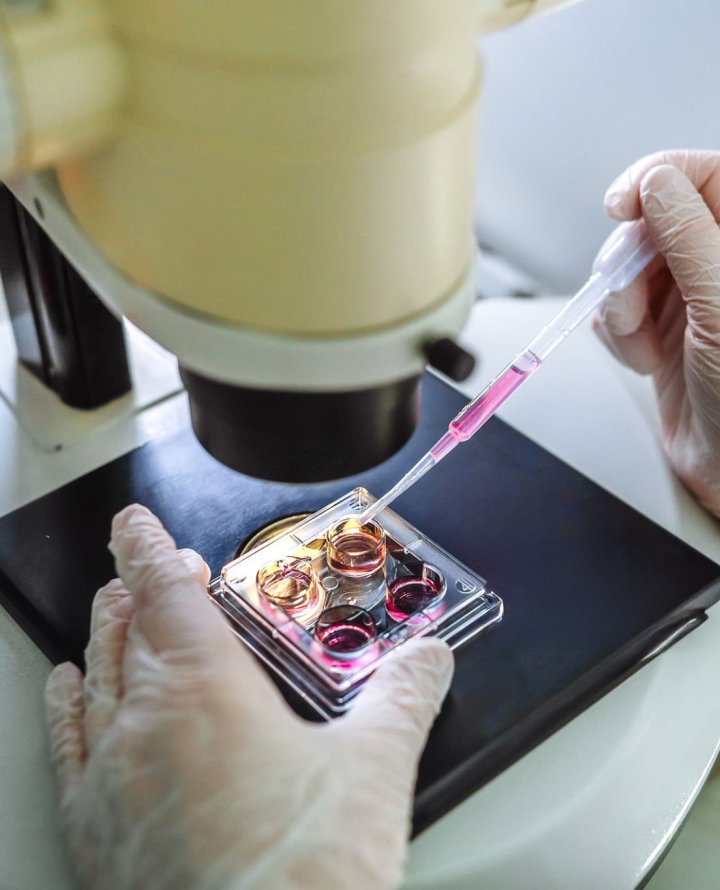
The pharmaceutical industry is working less and less cost-effectively. A major reason for this is that after a long development process, many drugs ultimately turn out not to work or to cause side effects. In the food and nutrition industry, too, it appears difficult to demonstrate in a cost-effective way that innovative products are safe and healthy. Finally, the chemical industry faces the challenge of determining the toxicity of large numbers of substances. With current protocols, this requires a lot of animal testing. Realistic laboratory models of organs based on cultured tissue can make a unique contribution to research on disease onset, substance safety, drug development, and personalised treatments tailored to individual patients. Besides the obvious biomedical relevance of this topic, the development of human and animal laboratory models fits well with society's strong need to find alternatives to laboratory animals. Organs-on-chips are examples of such laboratory models based on the implementation of cellular material in microdevices. The technology offers the possibility of making chips in which biochemical, mechanical, and physical environmental factors can be perfectly controlled. A next step is to grow tissues under conditions like those present in the human body, and make the tissues function like organs in our bodies.
Connecting character
Culture models of human organs on a chip can certainly be developed within a decade, especially because of the major advances that can be made in the Netherlands in stem cell biology, microfluidics, nanotechnology, materials science, 3D printing and genetics. Research requires sources of human tissue; it requires legal and ethical research to make this possible in the Netherlands. Unsuspected applications of integrating human tissue with electronics and early and accurate prediction of disease development also raises ethical questions. Synthetic biology, including the construction of cells or organs and associated detection and analysis systems on a chip, is booming as a research field. The field is mentioned under the theme 'Regenerative medicine' in the top sector Life Sciences and Health, and under 'Chemical nanotechnology & devices', a programme line within the top sector Chemistry. The research ties in very well with extensive programmes in the United States such as the BRAIN Initiative and the Human Brain Project of the European Union.