NWA
The Dutch Research Agenda

Multilingual voices in STEM education

The Netherlands is a diverse and multilingual country, but the multilingual voices of children with a migration background are rarely heard. These children receive education in Dutch, which is a language that they do not necessarily master, while knowledge and proficiency in their mother tongues remain unused. As a consequence, many children do not participate in education as successfully as their native peers. The problem is particularly pressing in Science, Technology, Engineering and Mathematics (STEM) education. Existing interventions to improve inclusion and diminish the achievement gap are fragmented and target formal learning settings with an exclusively monolingual focus on Dutch. These interventions do not capitalise on what children with migrant backgrounds know in their mother tongues and ignore that children also learn in informal settings outside school. Multilingual approaches to address these issues, such as translanguaging, have gained popularity, but it is largely unknown why, when and how such approaches benefit children’s formal, non-formal and informal learning. Multilingual voices in STEM education (Multi-STEM) will address these knowledge gaps by using an ecological approach that combines the concept of translanguaging with a boundary-crossing framework, and examines children’s learning through all their linguistic resources in and across different learning settings. To maximise successful implementation of a flexible toolbox along with new insights, ecologically valid research will be conducted in the actual learning settings in close collaboration with parents, teachers and other educational professionals. Scientific and societal breakthroughs of Multi-STEM concern the understanding of translanguaging as a form of boundary-crossing by all parties around the child, and promotion of translanguaging in and across different settings. The results of Multi-STEM will enhance the communication between teachers, parents and children, and impact on children’s learning in a more inclusive society.

File number
NWA.1292.19.253
Project lead
prof. dr. W.B.T. Blom
Lead organisation
Universiteit Utrecht
Programme
Onderzoek op Routes door Consortia 2019
Funding instrument
NWA L1
Status
Lopend
Theme
Individual and society
Consortium
Universiteit Utrecht, Hogeschool Utrecht (HU University of Applied Sciences), iPabo Amsterdam, CPS onderwijsontwikkeling en advies, Expertis, Expertisecentrum Nederlands, Stichting Leerplanontwikkeling SLO, Platform Talent voor Technologie, NEMO Science Museum, Museon, Teylers Museum, Spaarnesant, Voila, Wereldkidz, Bijzonderwijs, Lund University Dept. of Clinical Sciences, Taal doet meer, Rutu foundation, It’s my child, Al-Amal, Joury, IOT, SARDES, Vereniging voor Science Centers, Lowan, NVORWO, SPRONG consortium, Wetenschapsknooppunt Universiteit Utrecht, Yunus Emre, gemeente Den Haag, Defence for Children
Part of routes

29 projecten
32 clustervragen
Afbeelding
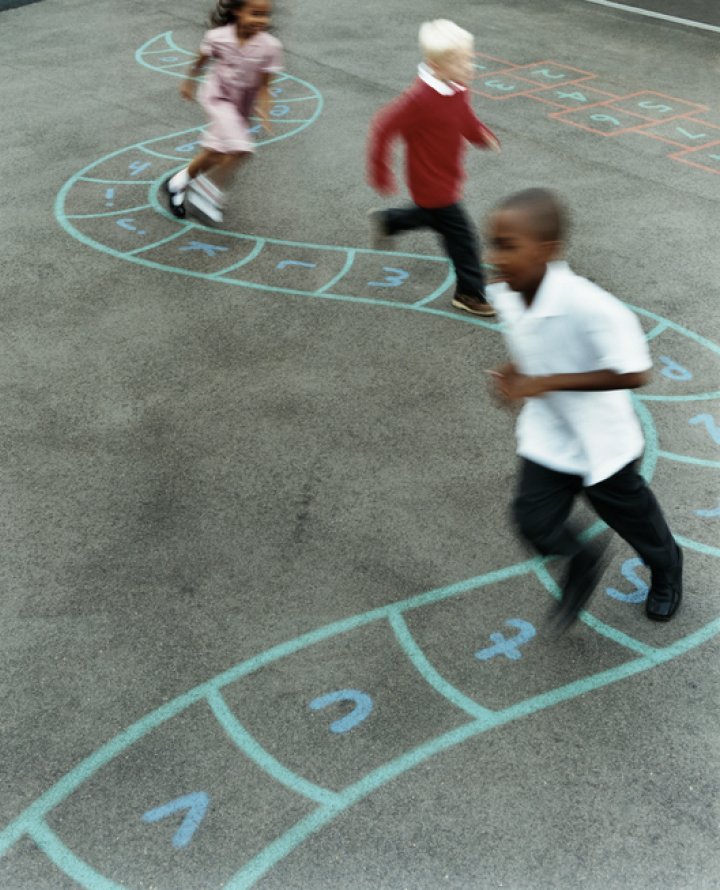
Kinderen aan het hinkelen

We cover these questions

Welke vragen hopen we met dit project te beantwoorden? Deze vragen zijn gegroepeerd in de volgende clustervragen.