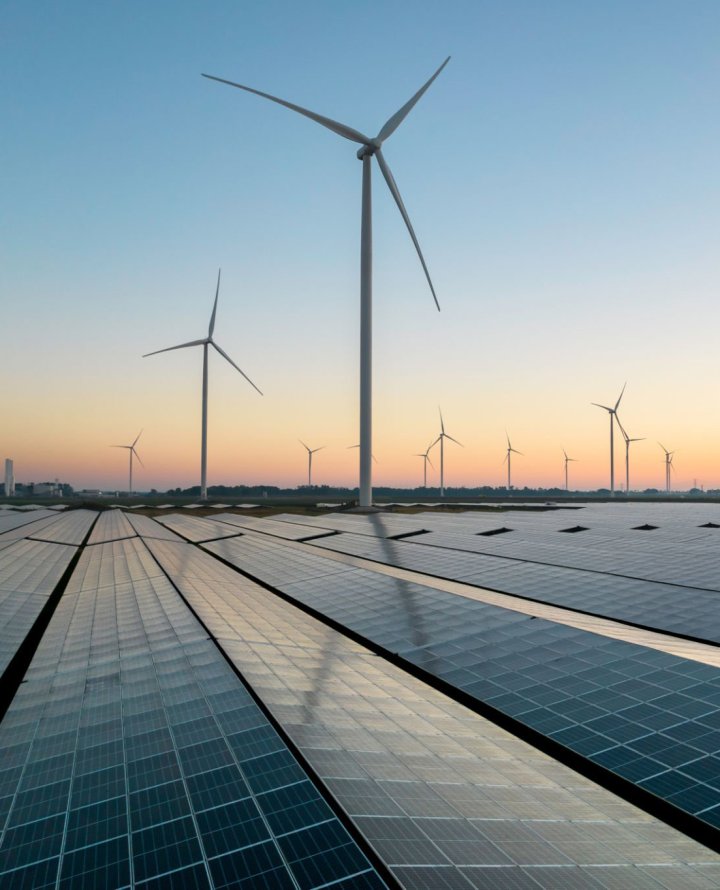
Future energy supply will have to come mainly from renewable sources. How do we make the switch from fossil fuels to energy from solar, wind, geothermal, or biobased methods? This question mainly deals with challenges of a somewhat more applied nature. Energy supply to industry is an explicit focus here. A number of other questions address other aspects of this problem.
Connecting character
Applied research is needed to substantiate choices for (combinations of) alternative energy sources and to predict the consequences of those choices. Besides use of solar, wind and bio-based methods, it is also wise to explore the potential of geothermal energy in more detail. Efficient energy storage capabilities are important keys to breakthroughs. If the supply of energy is going to consist of multiple sources in multiple locations, technology for smart grids and for linking supply and demand is needed with corresponding methods for (international) energy pricing. Sub-questions are how to combine agro-resources for renewable energy with sustainable material and food production and how to close the loop of energy and raw materials. Advances in non-contact ways of energy transfer would greatly increase the range and hence acceptance of electric vehicles. As long as fossil fuels are indispensable, rigorous energy conservation is a powerful tool to accelerate the transition. Design questions lie in the area of energy saving in the built environment and in industrial processes, in exploiting waste heat, as well as in preventing friction losses. Savings can also be achieved by changing behaviour and making smart use of local conditions. Think of data centres cooled by the environment in Iceland, or greenhouses directly heated in Spain. Applied research in areas such as social and logistics can support policies here that lead to saving interventions.