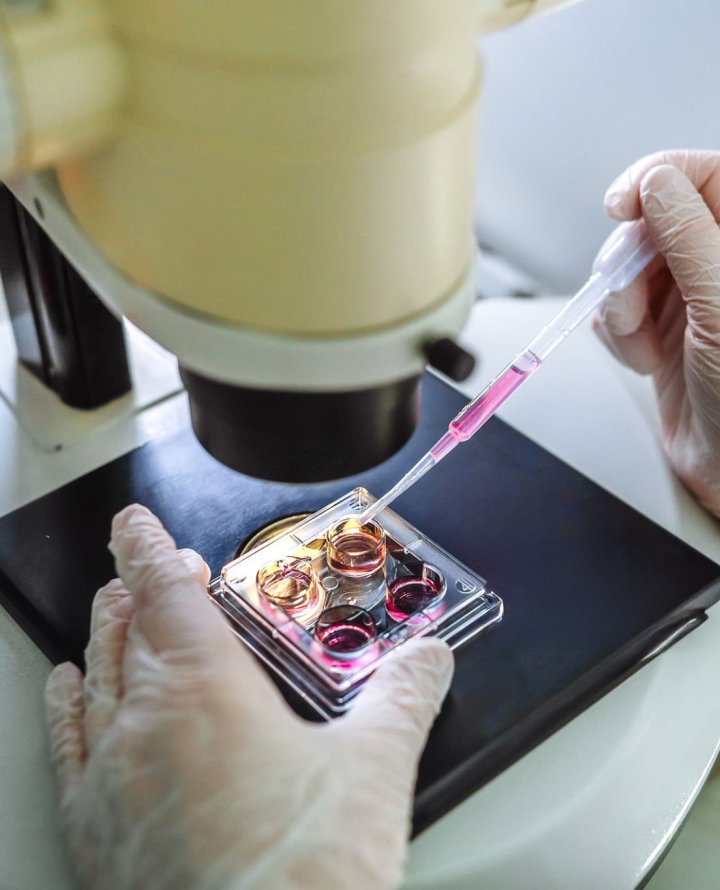
Regenerative medicine ̶ restoring function in damaged organs and tissues ̶ is on the brink of a revolution, given the potential of using stem cells and tissue engineering for a new method of healing. Stem cells are the source of all tissues and organs. But how do they work and how do they know what to become? Making the step from stem cell to customised tissues and organs requires a better understanding of how stem cells work, and how different types of tissues in an organ are related in the three-dimensional context. Furthermore, by applying regenerative medicine and promoting bodily regeneration, the need for donor material may decrease - a highly desirable social development given the severe shortage of donor organs.
Connecting character
Stem cell technology and tissue engineering offer the possibility of growing tissues from the body's own cells. Pluripotent stem cells are able to differentiate into all types of specialised cells in our body; multipotent adult stem cells can only differentiate into some specialised cells but are safer. Which source will be best for body repair should become clear from research in the next decade. Biomaterials should be developed that adapt to the host, do not lead to rejection reactions, and ideally stimulate the body's own tissues to self-repair. In some cases, tissues may be able to be repaired by intervening at the molecular level. In the future, it may even be possible to make tissues using 3D printing.