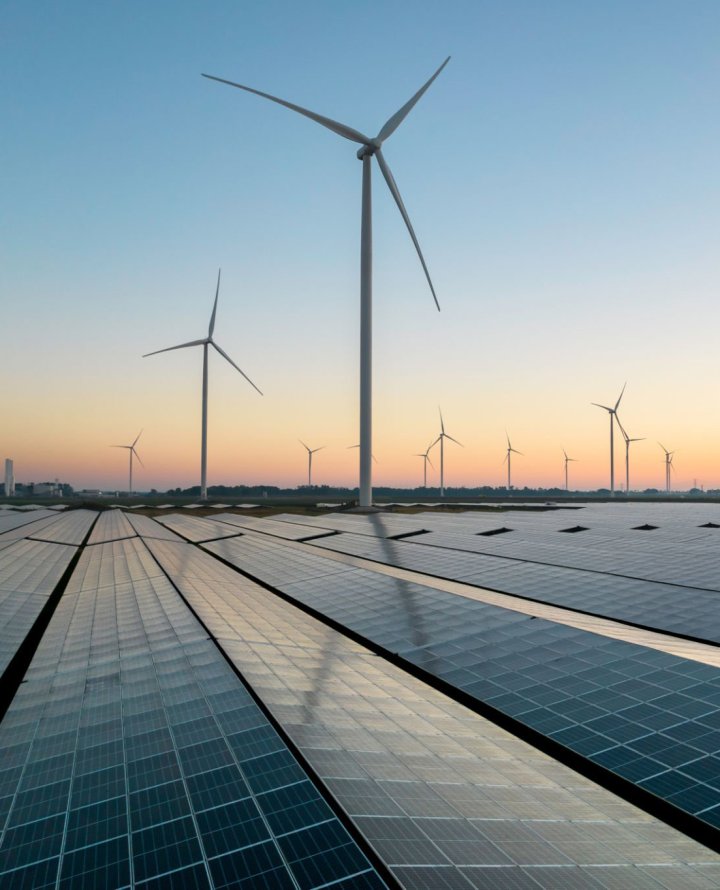
For large-scale deployment of renewable energy sources such as solar and wind power, one of the crucial challenges is the availability of energy at the right time and place. Energy storage is needed to bridge the differences between energy demand and supply patterns; here we have to deal with differences in time scales and per location, and thus with smart grids and smart energy pricing. Electricity and heat can be stored in batteries and heat batteries, respectively. In addition, we can use kinetic energy as in flywheels or pressure, for instance in the form of compressed air or pumping water to higher elevation basins. Energy can also be stored in the form of fuels or in chemical bonds in general. For example, electricity can be used to make hydrogen from water, which can be further processed into other gaseous or liquid fuels that can be easily stored and transported for longer periods. New materials are at the heart of breakthrough technologies needed for rigorous transitions. Fundamental research on materials, in close interaction with engineering and applications research, is also highly relevant to the transition from fossil to renewable energy. The recent discovery of perovskite solar cells is an example of how materials research is constantly opening up new perspectives.
Connecting character
Energy storage and supply-demand matching are a key priority theme in research and innovation programmes around renewable energy. Research focuses not only on exploring new properties of materials, but also on more efficient energy conversion, alternatives to energy-wasting electronics, loss-free storage and grid utilisation. This involves questions about catalysis, transparent conductors and semiconductors, high-temperature superconductivity, replacement of scarce and expensive elements such as lithium in batteries and rare earths in magnets, metals and ceramics that can withstand very extreme conditions, but also whether piezo materials can be used to convert kinetic energy into electricity. Besides technological innovation, behavioural influence and social adaptation play a major role. Further development and translation of the knowledge into low-cost product concepts and systems offers companies opportunities in the global energy market. The question fits within the policy spearheads 'Closing energy, raw material and water chains' and 'Making the economy more sustainable and ecological'.