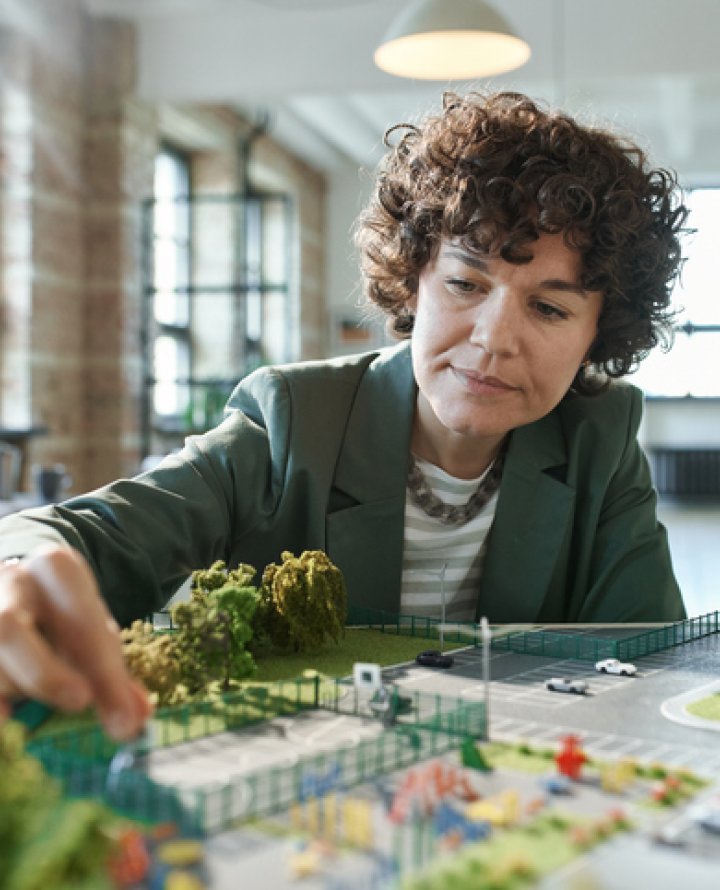
In the coming years, the Netherlands will face the challenge of addressing issues of population growth, change in ecological structures such as water management and green space preservation, regulation of traffic and transport, economic and welfare interests of farmers and citizens in an integrated way. It is very important for our densely populated country that all these interests are weighed up, and that a balance is struck between, on the one hand, investments in infrastructure and facilities for water management, for example, and, on the other, the efficient use of those facilities. Such alignment and coordination is necessary to keep our country liveable in both the literal and figurative sense, and to maintain the Netherlands' role as a gateway to Europe.
Connecting character
Spatial planning brings together fundamental questions about the relationship between people and nature and how societal functions - economic, social, cultural - can be combined or should be balanced against each other. Relevant questions in this context are: - What are the conditions for improving the quality of the living environment? How can citizens and policy contribute to this? - In what ways can we improve water management in the Netherlands/Europe? Water management has been a central concern in the history of the Netherlands and will remain so due to large-scale climate change and mobility, as well as more intensive use of available land for all kinds of functions. - In what ways can we better solve problems in traffic and logistics now and in the future? The Netherlands will remain important as a transport country and as a transit country with important and large outlets in Europe. As a result, traffic and logistics issues are of great importance, also in terms of Gross National Product and prosperity.