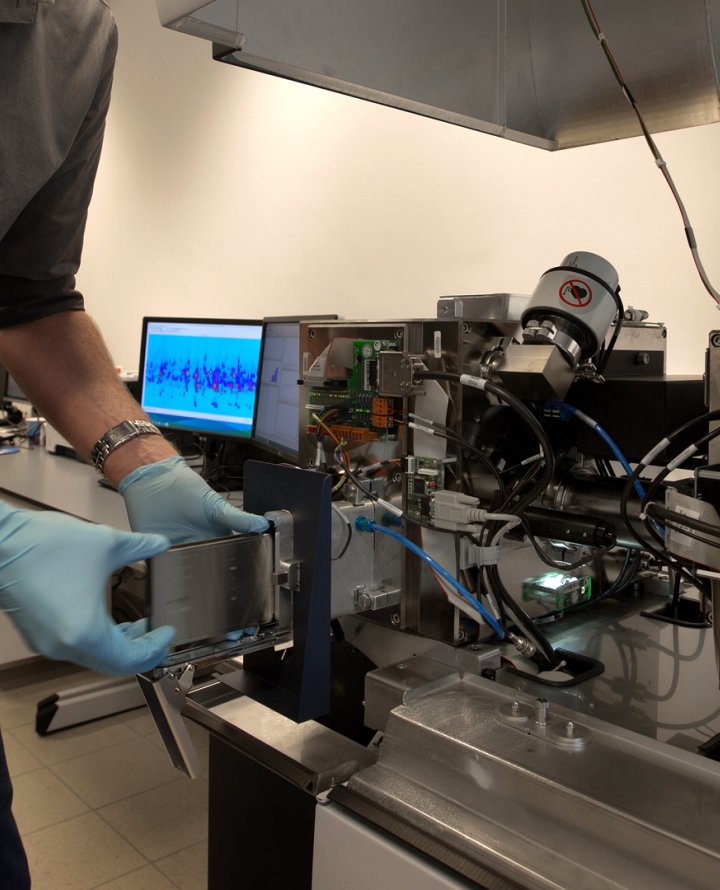
Stationary energy storage for renewables is vital in transitioning our society towards a greener and more sustainable one. Redox flow batteries (RFBs) are promising candidates for stationary storage due to their high modularity, flexibility and scalability. Nevertheless, limited lifetime and low energy density still hinder the wide deployment of RFBs, remaining major challenges for the existing and emerging flow battery technologies. Prolonging the lifetime of RFBs requires an understanding of capacity fade. Without an in-depth mechanistic understanding, developing a long-lasting flow battery system is nearly impossible. Obtaining such an understanding requires operando measurement and detection tools. This proposal aims to develop a multimodal and simultaneous measurement platform to gain molecular-level understanding and to guide the design of long-lasting redox flow batteries for stationary applications. Combining nuclear magnetic resonance, electron paramagnetic resonance and mass spectrometry into such a measurement platform will achieve high sensitivity, high chemical specificity and applicability for an extremely wide range of molecules. In parallel, a new class of iron-based chemistries, consisting of only earth-abundant and non-critical materials, will be explored via the multimodal platform, aiming to boost the energy density of a RFB by two or three times higher than the state-of-the-art vanadium RFB.