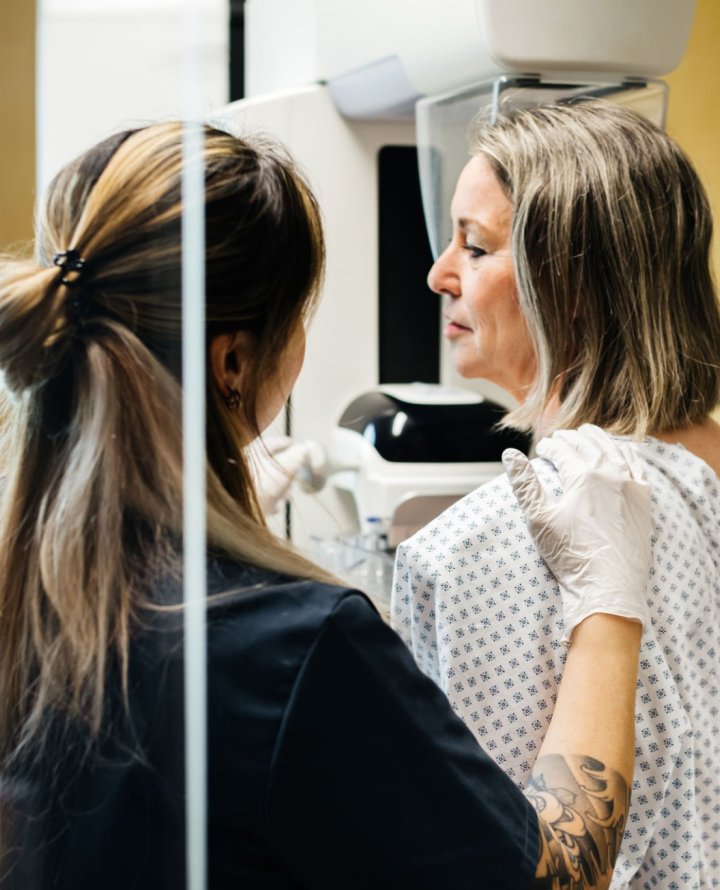
In the Netherlands 2,300 women each year, face a diagnosis of Ductal Carcinoma In Situ (DCIS). As we cannot reliably distinguish low-risk from high-risk DCIS, almost all women with DCIS receive surgery often followed by radiotherapy, meaning that women with low-risk DCIS carry the treatment burden without benefits.
Learning how to distinguish potentially progressive from non-progressive DCIS (095) will reduce overtreatment. Massive, well-annotated, unbiased cohorts, including mammographic images, tissue samples, and long-term follow-up are now available through our PRECISION Grand Challenge (1). Also, relevant features influencing the progression of precursor lesions to invasive breast cancer are of high importance. Both are now available, enabling the development of the novel technology needed for distinguishing between women with harmless or hazardous DCIS, removing the burden of needless treatment, while not compromising excellent outcomes from DCIS management presently achieved (2).
The last crucial piece of the puzzle - to impact daily clinical practice – draws on the development of an innovative new way to undertake risk forecasting. Specifically, integration of explainable AI (3, 4) with expert knowledge to establish dynamic predictive modelling inspired by principles from weather forecasting (5-7). We call this particular scientific breakthrough, explainable dynamic predictive modeling (XDPM). This will generate a highly innovative, dynamic means of DCIS-risk forecasting that is applicable in daily practice for personalised care.
To optimize DCIS-risk forecasting, funding is needed for 8 years for collecting comprehensive multidimensional data series, including at least 5-year follow-up, allowing not only development of explainable dynamic DCIS risk forecasting, but also its validation, optimization, and implementation into daily practice.
Applying dynamic DCIS-risk forecasting will deliver the intended societal breakthrough, preventing needless treatment for over 50% of the women with DCIS/year in the Netherlands, preserving quality of life and healthcare and saving over €15 million per year in healthcare costs (094).