NWA
The Dutch Research Agenda

Towards a sustainable and dynamic landscape for farmer, nature manager, citizen and biodiversity (Acronym: VeenVitaal)

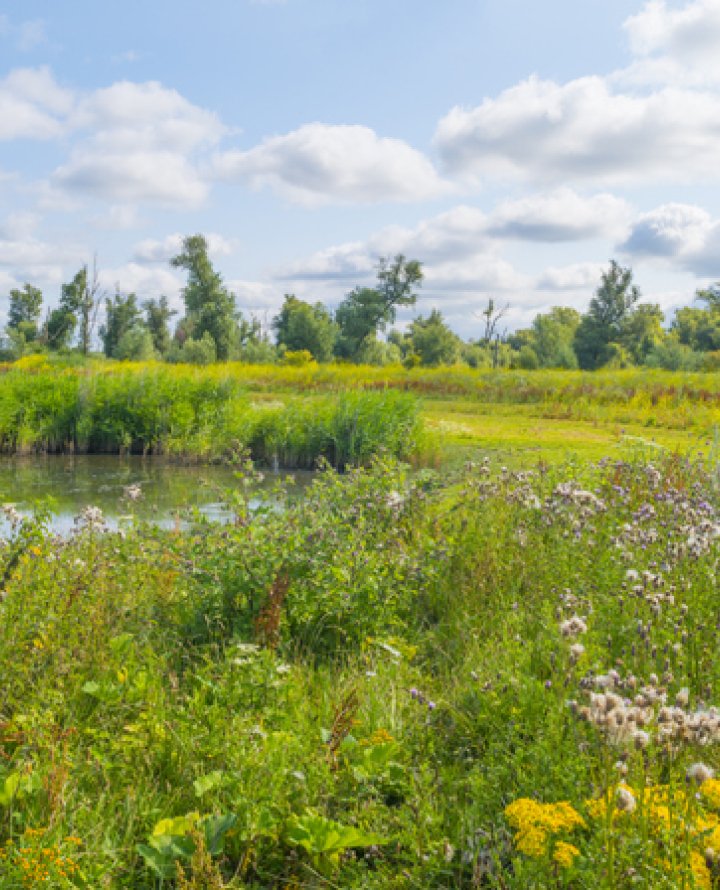
Biodiversity in our characteristic peat meadow landscape has declined sharply due to agricultural intensification and drainage. Next to biodiversity loss, intensive land-use has resulted in soil subsidence, nutrient-enrichment and greenhouse gas emissions. Key to improvement lies in increasing the sustainability of current activities in the area, implying a transformation to a form of land-use that leads to biodiversity restoration, halts peat degradation, maintains profitable business operations for landowners and creates an inspiring landscape for citizens. Veenvitaal, a collaboration of scientists, nature managers, farmers, and many other actors, is a Living Lab project in the peat meadow area surrounding Metropole Amsterdam. VeenVitaal investigates which interventions in the landscape are effective to restore biodiversity and essential ecosystem functions and services of peat meadows and:
• contributes new knowledge through integration and analysis of existing and new biodiversity and ecosystem (services) data;
• underpins, develops and validates an integrated set of objective, simple and reliable indicators (KPIs) that together quantify the degree of recovery and monitor the transition to sustainable peat meadows;
• links ecological and socio-economic systems by assessing both existing and alternative business models of key actors in the agriculture value-chain, with explicit roles for payments based on biodiversity and ecosystem services from market and society;
• organises all of its activities using a Living Lab approach, with Responsible Research & Innovation and citizen and multi-actor involvement as core values. Through this approach the wide variety of societal partners are explicitly involved in all project stages, and impacts of cooperation and use of findings in practice are maximised;
• links the relevant policy areas and scientific disciplines to existing practices and current initiatives in the region, and contributes to the Delta Plan on Biodiversity.
• exchanges lessons learned from multi-stakeholder co-creation and action for other projects with a Living Lab approach.

File number
NWA.1389.20.125
Project lead
prof. dr. M.P. Berg
Lead organisation
Vrije Universiteit Amsterdam
Programme
Onderzoek op Routes door Consortia 2020/21
Funding instrument
NWA L1
Status
Lopend
Theme
Man, the environment, and the economy
Consortium
Vrije Universiteit Amsterdam, Rijksinstituut voor Volksgezondheid en Milieu (RIVM), Rijksuniversiteit Groningen, NIOZ Koninklijk Nederlands Instituut voor Onderzoek der Zee, Wageningen University & Research, Universiteit Leiden, Aeres Hogeschool Almere, Stichting Wageningen Research, Naturalis Biodiversity Center, Staatsbosbeheer, Natuurmonumenten, Landschap Noord Holland, Vereniging van Bos en Natuureigenaren, Hoogheemraadschap, Provincie Noord-Holland, Zoogdiervereniging, Vlinderstichting, Nederlandse Entomologische Vereniging, Stichting Ecologisch Vleermuizen Onderzoek, Land van Ons, Rabobank, Gemeente Amsterdam, Vogelbescherming, Waterschap Waternet, Koningshoeve-Ettingen BV, LTO-Noord, Wij.land, BoerenNatuurCollectief Noord-Holland Zuid, BoerenNatuurCollectief Water, Land en Dijken, Boeren van Amstel, Jester & Wylde
Part of routes

We cover these questions

Welke vragen hopen we met dit project te beantwoorden? Deze vragen zijn gegroepeerd in de volgende clustervragen.