NWA
The Dutch Research Agenda

Odour Based Selective Recognition of Veterinary Diseases (OBSeRVeD)

Many (veterinary) conditions and infections are accompanied by the emission of Volatile Organic Compounds (VOCs) in a specific composition, as confirmed by veterinarians who can smell the wide-spread presence of disease in a stable. Detection of this VOC mixture in very low concentrations (ppb) in an early stage of a health disruption, or when only few animals are affected, makes applying interventions possible to prevent the spread of diseases among animals. Tools to predict or prevent diseases are a breakthrough innovation, addressing socio-economic demands for sustainable animal production, without antibiotics and minimal environmental impact. The challenge is therefore, to have healthy livestock production chains under conditions that prevent development of disease and health problems without systematic use of antibiotics and with minimal influence on food safety. Currently, no sensing device exist that have sufficient sensitivity and selectivity and can enable this in an economic way.
To this end, the realization of a versatile, cheap, small, low-power and yet very sensitive system that can identify odours is needed. Existing sensor systems, such as e-nose equipment make use of insufficiently sensitive macroscopic metal-oxide sensing elements that require high power and take up large volumes. Therefore, the applicants have taken up the challenge to develop a cheap, low-power and smart very sensitive VOC detection system based on electronic nose principles for early veterinary disease detection. Such a system would consist of a sensor platform, based on micro- or nanotechnology for making it sufficiently sensitive and scalable, coated with affinity layers. Because the affinity layers cannot be made 100% specific for a given VOC, the readout of n sensor array, each coated with a different layer, will have to be processed to yield a fingerprint of the composition of the mixture. Such a development requires solving numerous scientific as well as technical challenges.

File number
NWA.1389.20.123
Project lead
dr. ir. C.A.J. Damen
Lead organisation
Saxion Hogeschool
Programme
Onderzoek op Routes door Consortia 2020/21
Funding instrument
NWA L1
Status
Lopend
Theme
Man, the environment, and the economy
Technology and society
Consortium
Saxion Hogeschool, Stichting Wageningen Research, Universiteit Utrecht, Universiteit Twente, Wageningen University & Research, Radboud Universiteit Nijmegen, Technische Universiteit Delft, Fontys Hogeschool, De Haagse Hogeschool, VSParticle BV, Bronkhorst Hightech BV, LioniX International BV, NXP -Semiconductor Netherlands BV, Van Eck Bedrijfshygiëne B.V., Applied Nanolayers BV, GVP-Emmen, Springmountain BV, QL Polymer, Connecting Agri and Food, De Heus B.V., Royal GD, VAA Dataworks, Radisurf, World Veterinary Poultry Association, Koninklijke Nederlandse Maatschappij voor Diergeneeskunde (KNMvD), AVINED, Philips.
Part of routes

5 projecten
78 clustervragen
Afbeelding
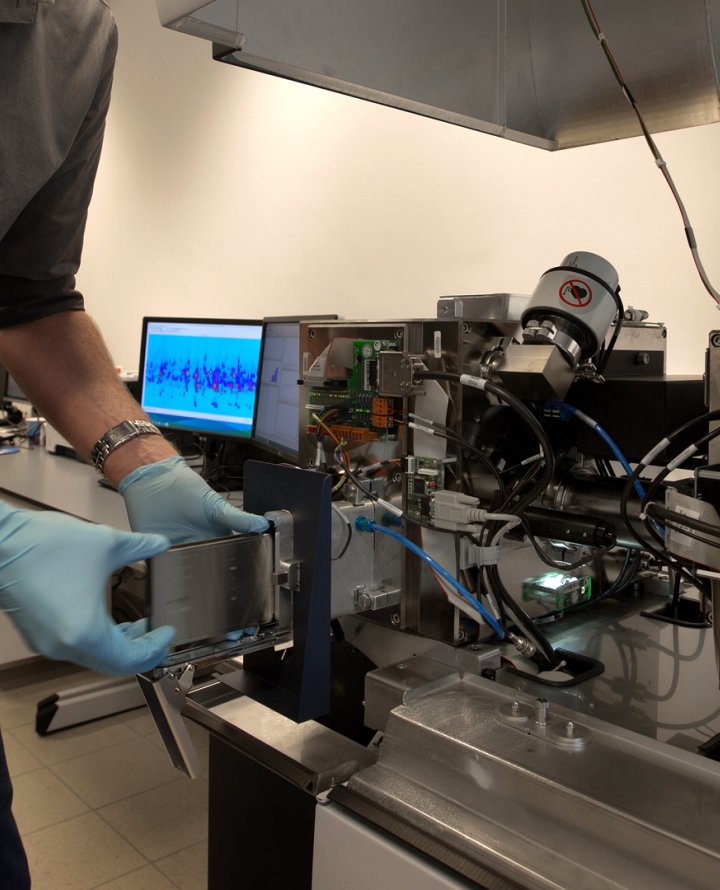
Meetopstelling

We cover these questions

Welke vragen hopen we met dit project te beantwoorden? Deze vragen zijn gegroepeerd in de volgende clustervragen.